
“The child is absorbed in play; it is his way of experiencing the world. To the adult who has forgotten, play may seem trivial, but for the child it is the serious business of growth and self-realization.”
— Jung (paraphrased from Development of Personality)
For children, especially those in primary school, play is far more than a way to pass time—it is their language. Adults use words to share feelings, but children reveal their inner world through imagination, stories, and games.
If your child struggles to regulate big emotions like anger, sadness, or anxiety, play becomes even more important. It is a bridge between what they cannot yet explain and what they deeply feel.
🌿 The Jungian Perspective: Play as the Language of the Soul
Swiss psychologist Carl Jung understood symbols and imagination as the natural expressions of the unconscious. In play, children instinctively use symbols, images, and stories to give shape to inner conflicts and emotions.
- Play reveals the inner world. A child lining up toy soldiers, burying figures in sand, or drawing storms may be showing us what words cannot capture.
- Play brings balance. Jung saw play as a healing activity that helps the psyche move toward wholeness. In the safety of play, children integrate difficult feelings and explore solutions.
- Play as transformation. Just as adults use dreams to process, children use play. Each role-play or drawing is a step toward growth and self-regulation.
When parents enter this world with openness, they affirm: “Your imagination matters. Your inner life is important.”
🧠 Dan Siegel’s Perspective: Play and the Developing Brain
Play is a natural way to help these two parts work together:
Child psychiatrist Dr. Dan Siegel explains that children’s brains are like houses with different “floors”:
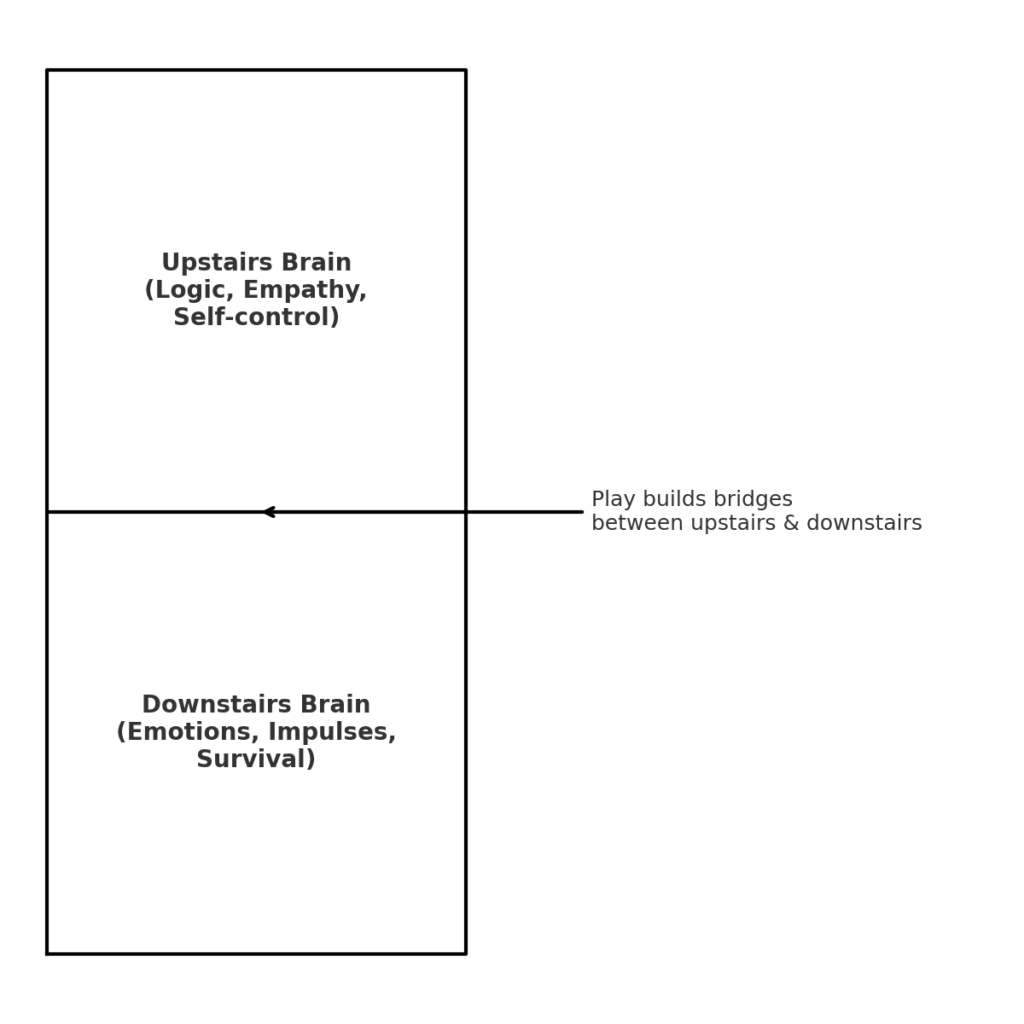
- The downstairs brain (emotions, impulses, survival responses) develops first. This is why children often react with big feelings.
- The upstairs brain (logic, empathy, self-control) is still under construction in primary school years.
- Role play allows children to practice problem-solving and empathy, strengthening the “upstairs brain.”
- Shared laughter and creativity build integration—helping the whole brain work in harmony.
- Movement games regulate the “downstairs brain” by calming stress and releasing energy.
This is why a child who struggles with big emotions benefits so much from playful rituals. Play literally wires the brain for connection, regulation, and resilience.
💛 Everyday Play Ideas for Busy Parents
Even a few minutes of intentional play can make a difference:
- Board or Card Games: Practice turn-taking, patience, and handling frustration.
- Drawing and Art: Invite your child to “show me how you’re feeling in a picture.”
- Outdoor Movement: Kick a ball, ride bikes, or take a walk—movement soothes emotional storms.
- Pretend Play: Enter their imaginary story. Listen to what the characters are “saying”—it often mirrors your child’s feelings.
- Child-Led Play Ritual: 10 minutes a day where your child chooses the game, and you simply follow.
🌱 Entering Your Child’s World
Play is more than entertainment—it is a bridge to your child’s heart and mind.
Through Jung’s lens, play gives form to the unconscious and fosters healing. Through Siegel’s lens, play supports the integration of the developing brain.
And through your presence, play becomes a gift of connection.
By entering your child’s world of play, you’re saying:
“I see you. I hear you. Your world is important to me.”
👉 Try This Tonight: Let your child choose a game before bed. Follow their lead. Notice how this small act builds trust, safety, and joy.