In the realm of child psychology, fostering social-emotional intelligence is paramount for healthy development. Renowned psychiatrist Dr. Dan Siegel offers a profound approach that delves into the intricate facets of the mind, emphasizing self-awareness, empathy, and relational skills. In this blog, we’ll explore Siegel’s approach to nurturing social-emotional intelligence in children, drawing insights from his framework and techniques.

Understanding the Mind in Social-Emotional Intelligence
Dan Siegel’s model of the mind comprises four essential facets:
- The Brainstem: Often referred to as the “Reptilian Brain,” it governs basic survival functions and instinctual responses. Where the fight-flight response is.
- The Limbic System: This emotional center of the brain influences feelings, memories, and social interactions.
- The Cortex: The thinking, reasoning, and decision-making part of the brain, crucial for higher cognitive functions.
- The “Upstairs” and “Downstairs” Brain: Siegel’s metaphor for understanding the balance between emotional reactivity (downstairs) and thoughtful responses (upstairs).
By recognizing and integrating these facets, children can develop a more holistic understanding of themselves and others, laying the foundation for social-emotional growth.
Cultivating Awareness of Self and Others to enhance Social-Emotional Intelligence.
Central to Siegel’s approach is the cultivation of awareness—both of oneself and of others. Through practices such as mindfulness and reflection, children learn to recognize their emotions, thoughts, and bodily sensations. This self-awareness forms the cornerstone of emotional regulation and resilience, empowering children to navigate challenges with greater ease.
Furthermore, fostering empathy involves teaching children to attune to the emotions and perspectives of others. By engaging in activities that promote perspective-taking and compassionate listening, children learn to develop meaningful connections and forge empathetic bonds with their peers.
Embracing the 3 R’s in Learning
Siegel emphasizes the importance of integrating the 3 R’s—Reflection, Relationships, and Resilience—into educational settings to support social-emotional development:
- Reflection: Encouraging children to reflect on their experiences, emotions, and interpersonal interactions fosters insight and self-understanding. Journaling, group discussions, and mindfulness exercises are powerful tools for promoting reflective practices.
- Relationships: Strong, supportive relationships serve as the cornerstone of social-emotional well-being. Creating a nurturing environment where children feel seen, heard, and valued cultivates secure attachments and enhances social competence.
- Resilience: Building resilience involves equipping children with the skills to navigate adversity and bounce back from setbacks. Teaching coping strategies, problem-solving skills, and fostering a growth mindset are key components of resilience-building.
Techniques to Teach Child Social-Emotional Intelligence
- Mindful Awareness Exercises: Introduce mindfulness practices such as deep breathing, body scans, and mindful listening to help children cultivate present-moment awareness and emotional regulation.
- Emotion Coaching: Teach children to identify and label their emotions, validate their feelings, and explore constructive ways to express and manage them.
- Role-Playing and Storytelling: Engage children in role-playing scenarios and storytelling activities that explore themes of empathy, perspective-taking, and conflict resolution.
- Social Skills Training: Offer opportunities for children to practice social skills such as active listening, cooperation, assertiveness, and empathy through structured activities and cooperative games.
By integrating these techniques into educational settings and daily interactions, parents and educators can empower children to develop essential social-emotional skills that lay the groundwork for lifelong well-being and flourishing relationships.
In conclusion, Dan Siegel’s approach to social-emotional intelligence offers a comprehensive framework for nurturing the holistic development of children. By fostering awareness, cultivating reflective practices, and embracing the 3 R’s in learning, we can equip children with the tools they need to thrive emotionally, socially, and academically.
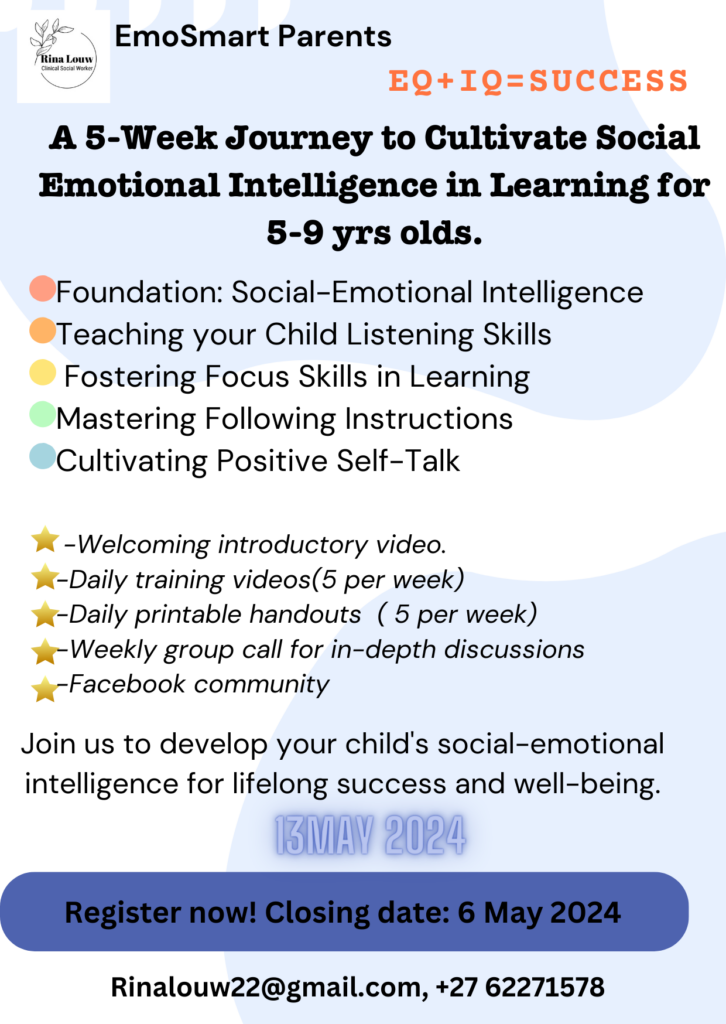
Let’s embark on this journey together. Join a program for parents with kids 5-9 yrs old if you are feeling stuck in the difficult task of parenting. This program will help you to regain your confidence as parent.
Social-Emotional Learning (SEL): 10 Tips for Parents. – Rina Louw (rinalouwclinical.co.za)