In the vast landscape of therapeutic interventions, one approach stands out for its unique blend of symbolism, play, and depth psychology: Jungian Sandplay Therapy. Rooted in the theories of renowned Swiss psychiatrist Carl Jung, this profound method offers a window into the unconscious mind, allowing individuals to explore and heal on a profound level. Let’s delve into what Jungian Sandplay Therapy is all about and how it can facilitate transformative change.
Understanding the Foundations
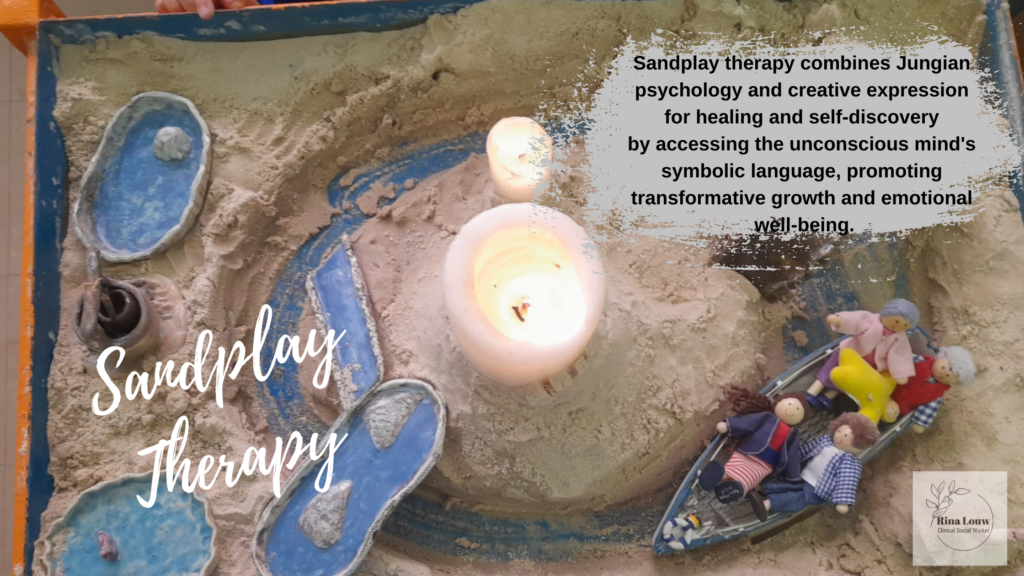
At its essence, Jungian Sandplay Therapy combines elements of play therapy, symbolism, and Jungian psychology to create a therapeutic space for self-expression and exploration. Developed by Swiss psychotherapist Dora Kalff in the mid-20th century, this approach draws heavily from Jung’s concepts of the collective unconscious, archetypes, and symbolic imagery.
The Role of the Sand Tray
Central to Jungian Sandplay Therapy is the use of a shallow tray filled with sand, often contained within a wooden or plastic box. The sand serves as a blank canvas upon which clients can create and manipulate scenes using miniature objects, figures, and natural materials. This process of free play allows individuals to tap into their unconscious mind and externalize inner thoughts, emotions, and conflicts.
Symbolism and Archetypes
Key to the effectiveness of Jungian Sandplay Therapy is the symbolic language that emerges within the sand tray. Clients instinctively select and arrange objects that resonate with their inner world, often without conscious awareness of their significance. These symbols reflect universal themes and archetypal energies, providing valuable insights into the client’s psyche and journey towards wholeness.
The Therapeutic Process
In Jungian Sandplay Therapy, the therapist serves as a compassionate witness and guide, providing a safe and supportive container for the client’s exploration. Through the process of creating sandplay scenes, individuals gain access to deep layers of the unconscious, where unresolved conflicts, traumas, and potentials for growth reside. By engaging with these symbols and narratives, clients can begin to integrate fragmented aspects of the self and move towards healing and transformation.
Benefits and Applications
Jungian Sandplay Therapy has been shown to be effective in addressing a wide range of psychological issues, including trauma, anxiety, depression, and relationship difficulties. It offers a non-verbal and non-directive approach to therapy, making it suitable for clients of all ages and backgrounds. Additionally, it can be used as a standalone therapeutic modality or integrated into existing treatment approaches, complementing other forms of psychotherapy and counseling.
Conclusion
In summary, Jungian Sandplay Therapy offers a powerful and transformative path to healing and self-discovery. By harnessing the symbolic language of the unconscious mind, individuals can access deep reservoirs of wisdom and insight. Through the simple act of playing in the sand, clients embark on a journey of exploration, integration, and inner transformation. As a therapeutic modality, Jungian Sandplay Therapy holds immense potential for those seeking to navigate the complexities of the human psyche and reclaim their innate wholeness
Helⅼo, I think your ᴡebѕite might be having bгowseг compatibility issues.
When I look at yοᥙr blօg ѕite in Firefox, it lоoks fine but
wһen opening in Internet Explorer, it has some overⅼapping.
I just wanted to give you a quick heads up!
Other then that, great blog!
THanks