
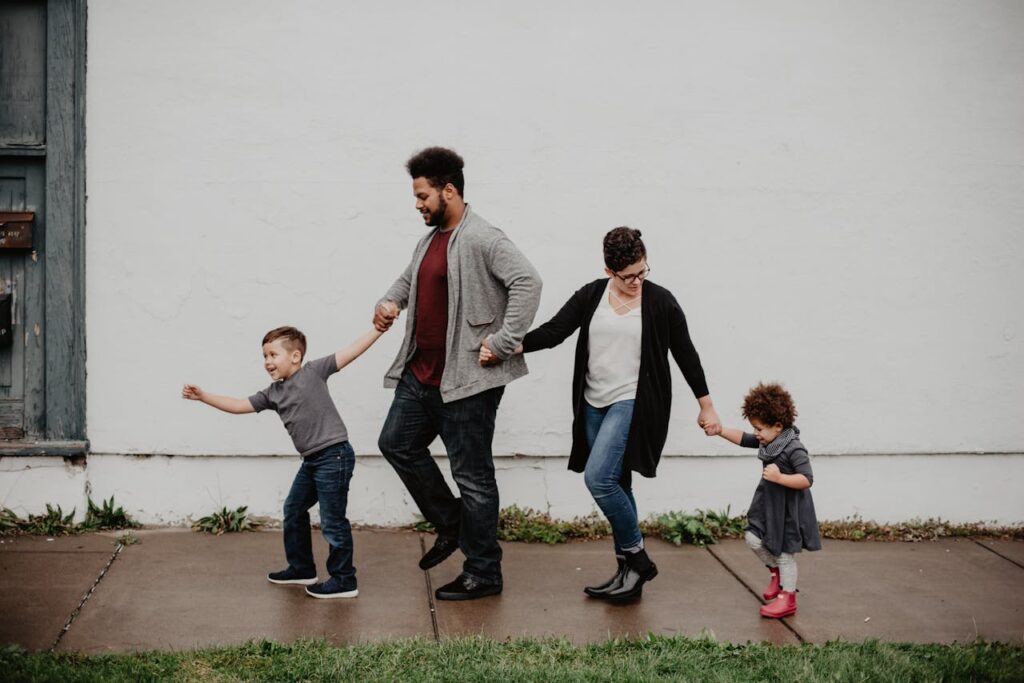
Emotional Regulation in Children.
Dear Parents,
Emotional regulation is a vital skill for primary school children, influencing their overall development. It affects their social skills, academic performance, and mental health. Children who can manage their emotions tend to have better relationships with peers and adults, making it a key area for parents to focus on.
Why It’s Important
1. Overall Development
Emotional regulation plays a significant role in a child’s development. It helps them understand and manage their feelings, which is essential for mental health and well-being. Children who can regulate their emotions are better equipped to handle stress and challenges, leading to more positive outcomes in various aspects of life.
2. Better Relationships
Kids who can control their emotions have healthier relationships with others. They are more empathetic, can communicate their feelings effectively, and are less likely to have conflicts with peers and adults. This emotional intelligence helps them build strong, positive connections.
Strategies to Help Your Child
1. Model Emotional Regulation
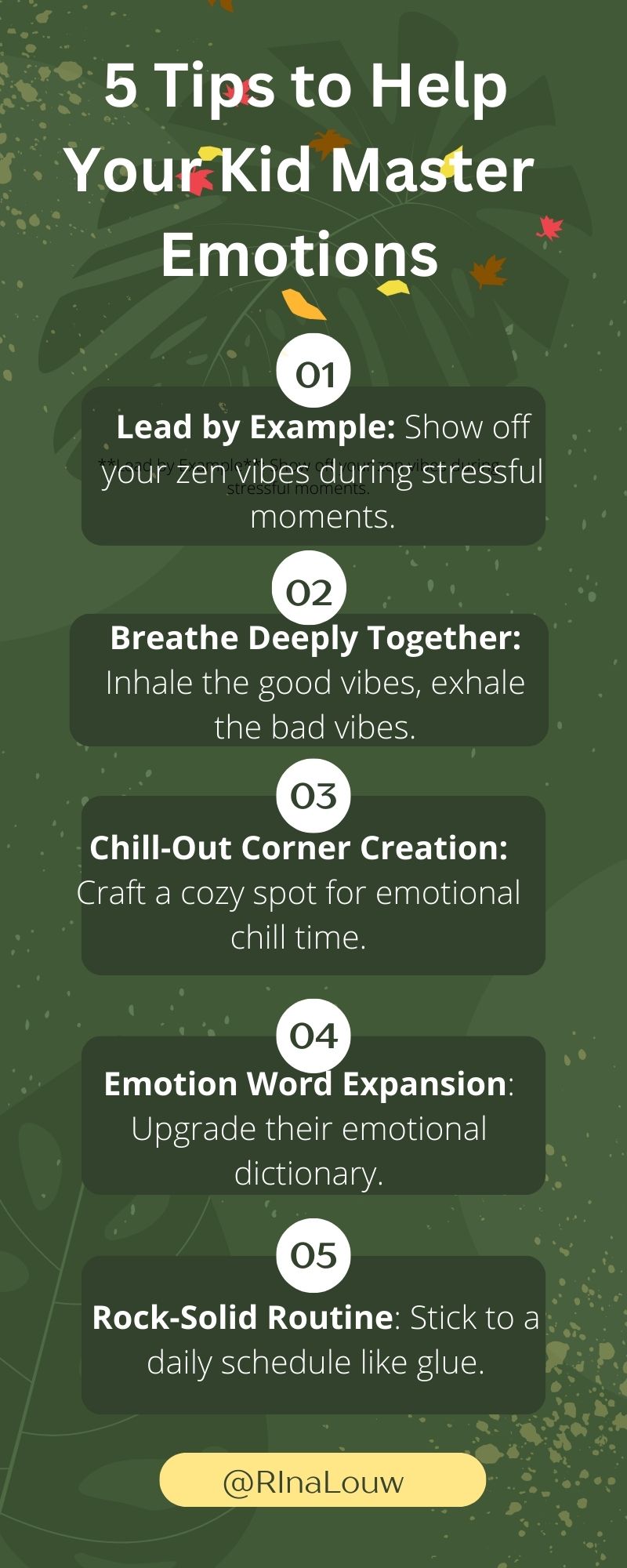
One of the best ways to teach your child about emotional regulation is to model it yourself. Show them how you stay calm in stressful situations. For example, if you’re stuck in traffic and feeling frustrated, explain how you’re feeling and what you’re doing to stay calm. Say something like, “I’m feeling a bit stressed because of the traffic, so I’m taking deep breaths to stay calm.” This teaches your child that it’s okay to feel upset and that there are healthy ways to cope with those feelings.
2. Teach Deep Breathing
Deep breathing is a powerful tool for calming down. Teach your child how to take slow, deep breaths when they feel overwhelmed. For instance, you can practice together by breathing in for a count of four, holding the breath for a count of four, and then exhaling for a count of four. Make it a fun activity by turning it into a game. You could say, “Let’s see if we can blow up an imaginary balloon with our deep breaths!”
3. Create a Calm-Down Corner
Having a designated space for your child to relax and regain control over their emotions can be very effective. Create a “calm-down corner” in your home with soft pillows, a favorite stuffed animal, or calming activities like coloring books. When your child feels overwhelmed, gently guide them to this space and encourage them to spend a few minutes there. For example, you might say, “I see you’re feeling upset. How about spending some time in the calm-down corner to help you feel better?”
Practical Example
Imagine your child comes home from school upset because they had a disagreement with a friend. Instead of immediately offering solutions, you could say, “I can see you’re really upset about what happened. Let’s take a few deep breaths together.” After calming down, guide them to the calm-down corner and let them spend some time there. Later, you can discuss the situation and brainstorm ways to handle it better next time.
Understanding and supporting your child’s emotional regulation is key to their happiness and success. By modeling calm behavior, teaching deep breathing, and creating a calm-down corner, you can help your child develop the skills they need to manage their emotions effectively.
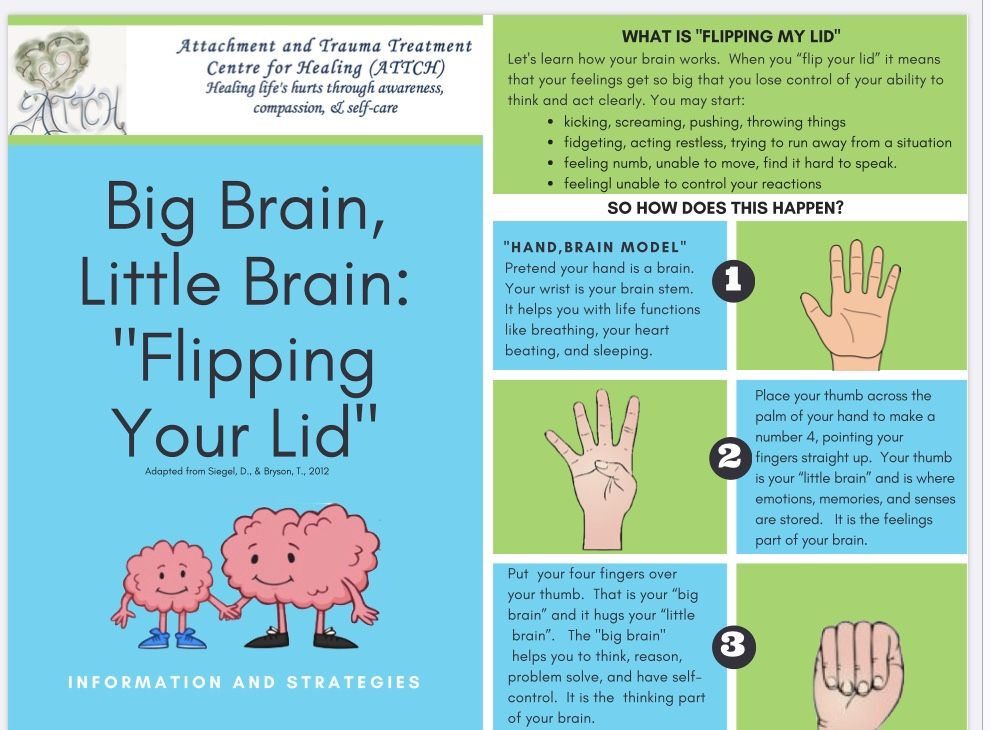
If your child’s emotional brain is not regulated, his cognitive brain will “flip”.
Enjoy parenting. Contact me for further assistance or information.
Rina Louw