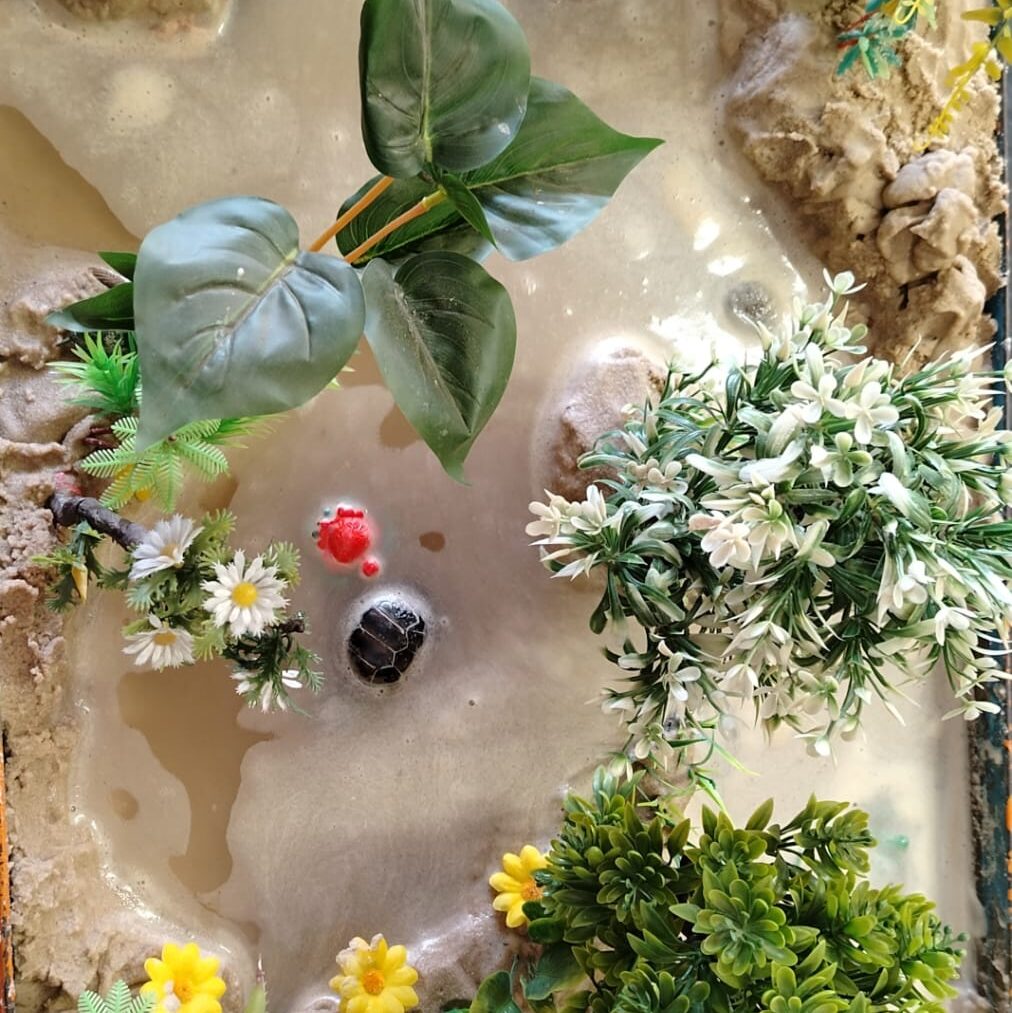
“The hands will solve a mystery that the intellect has struggled with in vain.” – C.G. Jung
The Silent Struggle of Boys
In my work as a Jungian Sandplay Therapist in a school environment, I meet many boys between the ages of 7 and 12 who find it difficult to express themselves. They struggle to identify their emotions, to feel them in real time, and to put them into words.
On the surface, this may appear as restlessness, aggression, or withdrawal — but beneath these behaviours lies something much deeper: a difficulty to feel, name, and communicate their inner experiences.
Our boys live in a world that often tells them to ‘be strong,’ ‘stop crying,’ or ‘get over it.’ These messages teach them early on to silence emotional expression. Over time, this leads to frustration, anxiety, and emotional dysregulation.
Why Self-Expression Matters
Self-expression is the foundation of emotional regulation. When a child can notice, name, and express feelings safely, the nervous system begins to calm, and the child can think and respond more clearly.
Neuropsychiatrist Dr. Dan Siegel, in his theory ‘Name it to Tame it,’ explains that when we put words to our feelings, we shift activity in the brain from the emotional centers (amygdala) to the higher thinking centers (prefrontal cortex). This process reduces emotional intensity and helps children manage overwhelming feelings.
But boys in this age group often lack emotional vocabulary — they don’t have the words to describe what they feel. They need another way to communicate.
Sandplay Therapy: A Language Beyond Words
In Jungian Sandplay Therapy, that language emerges through symbols and play. Using miniatures and figures, children build scenes in the sandtray that mirror their emotional world. Each object — a dragon, bridge, turtle, or stormy sea — becomes an expression of inner experience.
Through their hands, the unconscious speaks, revealing emotions, fears, and wishes that the child cannot yet articulate verbally.
For boys, Sandplay Therapy offers a powerful pathway to healing because:
🌿 It allows them to express without words.
🌿 It helps them see and name emotions symbolically (the dragon of anger, the broken bridge of sadness).
🌿 It naturally supports emotional regulation, as the act of creating in sand calms the nervous system.
Behind the Screen: What I See in My Practice
Working within schools, I see how boys often experience emotions out of sync — too late, too fast, or too strongly to regulate. Their emotional timing is disrupted, often because there was never a safe space to slow down and express.
When I speak with parents, I often discover that self-expression is also difficult for adults. If parents themselves were not encouraged to name emotions, they may unknowingly pass on the same silence.
Sandplay Therapy begins to break this generational pattern. It allows both child and parent to reconnect with the language of feeling — through symbols, images, and shared reflection.
From Chaos to Coherence
Jung believed that healing happens when the unconscious is allowed to speak through symbols. In Sandplay Therapy, this process becomes visible: the child’s inner chaos begins to take shape, moving toward coherence and self-awareness.
Over time, boys learn to:
✔️ Recognize what they feel.
✔️ Name their emotions (verbally or symbolically).
✔️ Regulate impulses through play.
✔️ Develop emotional confidence and self-understanding.
This is the beginning of individuation — the lifelong process of becoming whole.
A Message for Parents and Teachers
Helping boys ‘name it to tame it’ starts with giving them permission to feel. Parents and teachers can model emotional language in simple ways:
“I feel sad today, but I know it will pass.”
“I feel proud of the way I handled that problem.”
These small moments teach boys that emotions are not threats — they are signals from the soul. Sandplay Therapy offers a safe, creative space for boys to reconnect with that inner language — and for parents to rediscover it too.
Final Reflection
When a boy builds a scene in the sand, he is building a bridge between his inner world and the outer world. Through play and imagination, he finds words for feelings, calm for chaos, and connection for isolation.
✨ Sandplay Therapy helps boys transform silence into story — and story into healing.